


Flooded Basement Cleanup in Troy, Michigan
A flooded basement can damage flooring, drywall, insulation, furniture, wiring, and personal belongings in a short time. Our team helps homeowners, landlords, property managers, and commercial property owners in Troy remove standing water, address sewage contamination when present, and begin controlled drying before hidden moisture causes further problems.
Basement flooding can affect established homes in areas such as Northfield Hills, Wattles Creek, and the Woodlands of Troy, as well as condominiums, townhomes, offices, retail spaces, and other commercial properties. Common causes include sump-pump failure, burst or frozen pipes, plumbing leaks, sewer backups, appliance failures, heavy rain, and snowmelt.
We help with clean-water leaks, contaminated sewage backups, and water that has moved into finished or unfinished basement areas. If standing water may have contacted electrical equipment or sewage, avoid entering the area and keep children and pets away. Shut off the water or electricity only if it is safe to do so.
Need Restoration Help in Troy? Call (248) 883-3340
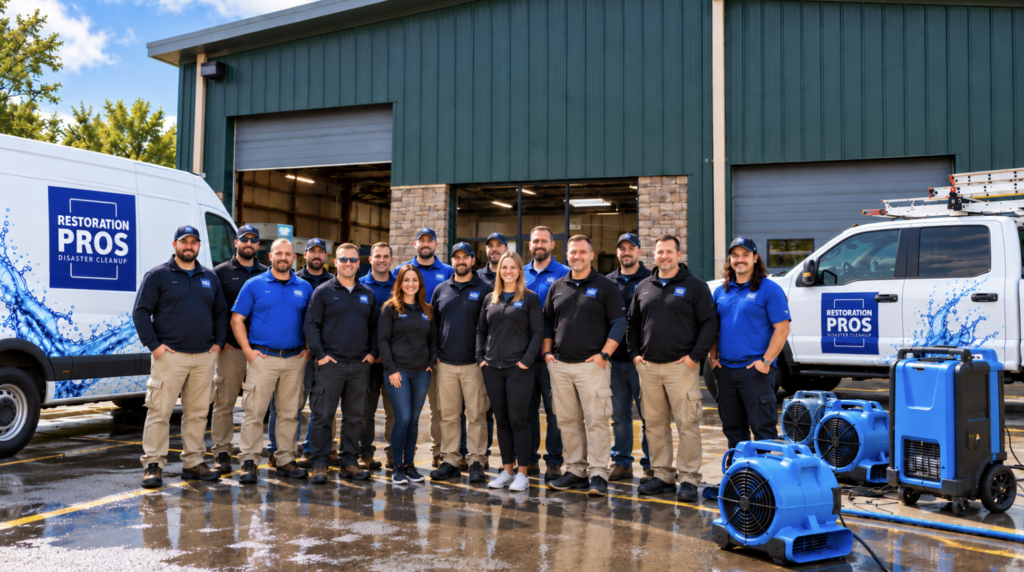
Our IICRC Certified Techs start with an assessment rather than guessing at the source or extent of the damage. We communicate what we find, document moisture conditions, and choose extraction and drying steps suited to the structure. Restoration Pros of Troy is registered with the BBB and provides 24HR Response for urgent water-loss situations.
Basement Flood Cleanup for Homes and Businesses
For commercial properties, the response also has to account for occupants, access, shared building systems, tenant spaces, equipment placement, and business interruption. We can coordinate work areas and scheduling around unaffected portions of a building when conditions allow, while documenting moisture in rooms, walls, flooring, and mechanical spaces.
How Our Water-Loss Process Works
We first identify the water source, inspect affected rooms, and look for signs that moisture has traveled beneath flooring, behind baseboards, into wall cavities, or under finished surfaces. The assessment helps determine which materials may be dried in place and which may require removal because of contamination or permanent damage.
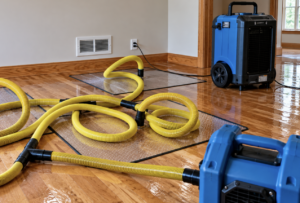
Next, our technicians extract standing water with professional equipment. We use moisture meters and other inspection tools to map damp materials and establish drying goals. Air movers and dehumidifiers are positioned to circulate air and reduce moisture in the structure, with placement adjusted as conditions change.
Drying is monitored rather than assumed complete because a basement can look dry while wood, drywall, insulation, or subflooring remains damp. We record changing moisture conditions, explain the next steps, and identify cleaning or repair needs after the structure is stable. When sewage is involved, affected porous materials may need removal, followed by cleaning and treatment of salvageable surfaces.
What Makes Troy Unique for Property Owners
Troy includes a broad mix of mid-century and newer ranch, colonial, tri-level, and split-level homes, along with subdivisions, condominiums, townhomes, mixed-use buildings, offices, retail centers, hotels, healthcare facilities, and technology-oriented properties. That variety matters because a finished residential basement, a commercial tenant area, and a mechanical room can require different access, documentation, and drying plans.
The City of Troy’s storm-drainage system includes drainage networks and retention ponds, so heavy rainfall, standing water, drainage surcharge, and private grading can affect individual parcels differently. The City of Troy also oversees municipal water, sewer, engineering, planning, and property-related functions that may be relevant when a loss involves drainage or a public connection. Conditions still need to be evaluated at the specific property because elevation, sump-pump performance, basement design, and private drainage all vary.
Troy School District facilities and the Corewell Health Beaumont Troy Hospital campus illustrate the range of larger institutional properties in the area. Schools, healthcare buildings, offices, and other occupied facilities may need controlled access, occupant-safety planning, equipment placement, and clear moisture documentation while unaffected areas remain in use when possible. These community facilities are local reference points, not customer or partner claims.
Seasonal Basement Flooding Risks in Troy
Winter freeze-thaw cycles can contribute to frozen or burst pipes, roof-ice problems, and water entry through aging building materials. Spring snowmelt and heavy rain may put added pressure on basements, sump systems, storm drains, and retention facilities. Summer thunderstorms can cause rapid roof, siding, window, basement, and commercial-roof intrusion.
Late-summer and early-fall storms may create localized ponding or sewer and storm-drain backups, while fallen leaves can obstruct catch basins and private drainage paths. Year-round plumbing failures, appliance leaks, sump-pump problems, and HVAC condensate issues can also send water into homes and commercial buildings. If the loss includes another type of property damage, see our fire damage restoration services or learn about mold removal in Troy.
For immediate help with water damage in Troy, call (248) 883-3340 to discuss what happened and the next steps for your property.
Serving Troy and Nearby Communities
Restoration Pros of Troy serves property owners throughout Troy and nearby communities including Rochester Hills, Auburn Hills, Sterling Heights, Clawson, Royal Oak, Birmingham, Bloomfield Township, and Madison Heights. Call when you need basement water extraction, sewage cleanup, structural drying, moisture documentation, or help planning the next repair steps after a loss.
Frequently Asked Questions
What should I do first if my Troy basement is flooded?
If it is safe, stop the water source and keep people and pets away from standing water. Avoid entering water that may involve electricity or sewage, then contact a restoration professional for an assessment and extraction plan.
Can you remove water after a sump-pump failure?
Yes. We can inspect the affected basement, extract standing water, map remaining moisture, and set up controlled drying based on the materials and conditions found.
How do you know whether a basement is fully dry?
Our technicians use moisture meters and documented monitoring to check materials such as drywall, wood, flooring, insulation, and subflooring rather than relying only on how the room looks.
Do you clean sewage backups as well as clean-water leaks?
Yes. Sewage losses require additional safety and contamination controls. We assess affected materials, remove contaminated water and unsalvageable porous materials when needed, clean salvageable surfaces, and dry the structure.
Do you help commercial properties with basement or water damage?
Yes. We work with commercial property owners and managers on access, occupant safety, equipment placement, moisture documentation, shared systems, scheduling, and keeping unaffected areas operating when conditions allow.
What causes basement flooding in Troy?
Common causes include sump-pump failure, frozen or burst pipes, plumbing leaks, sewer backups, appliance failures, heavy rain, snowmelt, drainage problems, and HVAC condensate leaks.
How quickly should water be removed from a basement?
Contact a restoration professional as soon as possible. Prompt assessment and extraction can limit the time water remains in contact with flooring, drywall, insulation, contents, and structural materials.
Can you help after water extraction is complete?
Yes. Restoration includes more than removing visible water. We can inspect for hidden moisture, monitor drying, clean affected areas when appropriate, and help identify repair planning needs after the structure is dry.